Buy el-arenal.eu ?
We are moving the project
el-arenal.eu .
Are you interested in purchasing the domain
el-arenal.eu ?
domain@kv-gmbh.de · 0541-91531010
Buy el-arenal.eu ?
What are river variables and potential variables?
River variables are physical, chemical, and biological characteristics of a river that can be measured and monitored to assess its health and quality. These variables include parameters such as water temperature, pH levels, dissolved oxygen, nutrient concentrations, and the presence of pollutants. Potential variables are factors that can influence or impact the river variables, such as land use practices, urban development, agricultural runoff, and climate change. Understanding both river variables and potential variables is essential for effective river management and conservation efforts. **
What is the difference between primitive variables and reference variables?
Primitive variables store the actual value, such as numbers or characters, directly in memory. Reference variables, on the other hand, store a reference to an object in memory rather than the actual value. This means that when working with reference variables, you are actually working with the object that the reference points to, while with primitive variables, you are working directly with the value stored in memory. Additionally, primitive variables are allocated on the stack, while reference variables are allocated on the heap. **

Similar search terms for Variables
Top-Angebote
Products related to Variables:
-
I Love Wellness Calm pillow mist for relaxation 125 mlI Love Wellness Calm, 125 ml, Air Fresheners Home Scents, The I Love Wellness Calm room spray will make your home smell beautiful with just one spray. The immediate effect means you can appreciate the pleasant fragrance as soon as you need it. Characteristics: a floral fragrance a herbal aroma citrus fragrance Ingredients: with essential oils How to use: You can also use it on fabrics. The fragrances are specially designed not to leave stains on fabric. Keep out of the reach of children and pets. If the product refill comes into contact with your skin, wash immediately with plenty of soap and water. If it gets into your eyes, rinse for several minutes with water.7,50 £*Shipping: 3,99 £Secure redirect to the provider
-
I Love Wellness Calm body oil for relaxation 125 mlI Love Wellness Calm, 125 ml, Bath Oils for Women, Do you have the feeling that your skin needs more care than it is getting from body lotion or body cream? I Love Wellness Calm body oil is the perfect product to enrich your skin care routine – it gives skin an extra dose of nourishment, supports its regeneration, and also softens it. Characteristics: leaves the skin flexible and supple has a pleasant fragrance relaxing strengthens the skin barrier nourishes and softens dry skin acts effectively against fatigue and exhaustion Ingredients: vegan product almond oil – nourishes, helps lock water in skin and keep it hydrated, softens rough textures and uneven skin, helps prevent flaking and irritation coconut oil – contains a large amount of antioxidants, helps prevent wrinkles and premature skin aging, intensively nourishes, softens and promotes hydration, regeneration and soothing of skin jojoba oil – keeps skin intensely hydrated, provides antioxidant protection, counteracts irritation and dryness, helps regulate sebum production and promotes regeneration How to use: Follow the instructions on the package.3,80 £*Shipping: 3,99 £Secure redirect to the provider
-
SEI Furniture Waterfront Black 2-drawer DeskSimple meets sophistication in this 2-drawer desk. The desk is crafted from a mix of wood and composite wood with a black satin finish, and features long turned legs and a spacious tabletop, large enough for a computer or your projects.264,99 $*Shipping: 0,00 $Secure redirect to the provider
-
SEI Furniture Waterfront 2-drawer White Writing DeskThis eye-catching, classically fashionable desk is ideal for students, home offices, and entry ways. Use as a console table or as a writing desk, because it has the functionality and style of both.174,03 $*Shipping: 0,00 $Secure redirect to the provider



-
What is the difference between ordinal scaled variables and ordinal variables?
Ordinal scaled variables are variables that have a specific order or ranking, but the intervals between the values are not necessarily equal. On the other hand, ordinal variables are variables that have categories with a natural order, but the numerical values assigned to them do not have any meaningful interpretation. In summary, ordinal scaled variables have meaningful numerical values with a specific order, while ordinal variables have categories with a natural order but lack meaningful numerical values. **
-
What are random variables?
Random variables are variables that can take on different values based on the outcome of a random event. They represent the possible outcomes of a random process and are used in probability theory and statistics to quantify uncertainty. Random variables can be discrete, taking on a finite number of values, or continuous, taking on any value within a range. They are essential for modeling and analyzing uncertain situations in various fields such as finance, engineering, and biology. **
-
What are reduced variables?
Reduced variables are a set of transformed variables that are used to simplify the analysis of a system or process. These variables are often obtained by scaling or normalizing the original variables to make them more manageable and easier to interpret. By using reduced variables, complex systems can be analyzed and understood more effectively, leading to better insights and decision-making. **
-
How do I solve an equation with form variables and solution variables?
To solve an equation with form variables and solution variables, you first need to isolate the solution variable on one side of the equation. This involves performing the necessary operations (addition, subtraction, multiplication, division) to move all other variables to the other side of the equation. Once you have isolated the solution variable, you can then solve for it by performing any additional operations needed to simplify the equation. Finally, you can substitute the solution back into the original equation to verify that it satisfies the equation. **
What is a local variable and what is the difference to instance variables, class variables, and normal variables in Java?
A local variable in Java is a variable that is declared within a method, constructor, or block of code and is only accessible within that specific scope. It is temporary and exists only for the duration of the method execution. The main difference between local variables, instance variables, class variables, and normal variables in Java is their scope and lifetime. Instance variables are declared within a class but outside of any method and are accessible to all methods within the class. Class variables are declared with the static keyword and are shared among all instances of a class. Normal variables refer to any variable that is not a local, instance, or class variable. **
How do you multiply variables?
To multiply variables, you simply multiply the coefficients (numbers in front of the variables) together and then multiply the variables together. For example, to multiply 3x and 4y, you would multiply 3 and 4 to get 12, and then multiply x and y to get xy. So, the result of multiplying 3x and 4y would be 12xy. Remember to apply the rules of exponents if the variables have exponents. **
Top-Angebote
Products related to Variables:
-
Inspire Picks Foldable Window Cat Hammock For Sunbathing & Elevated Relaxation pinkGive your cat the perfect spot to lounge, nap, and enjoy the view with this window cat hammock. Designed to attach securely to glass surfaces using strong suction cups, this elevated pet bed creates a cozy space for cats to sunbathe, relax, and...99,56 $*Shipping: 0,00 $Secure redirect to the provider
-
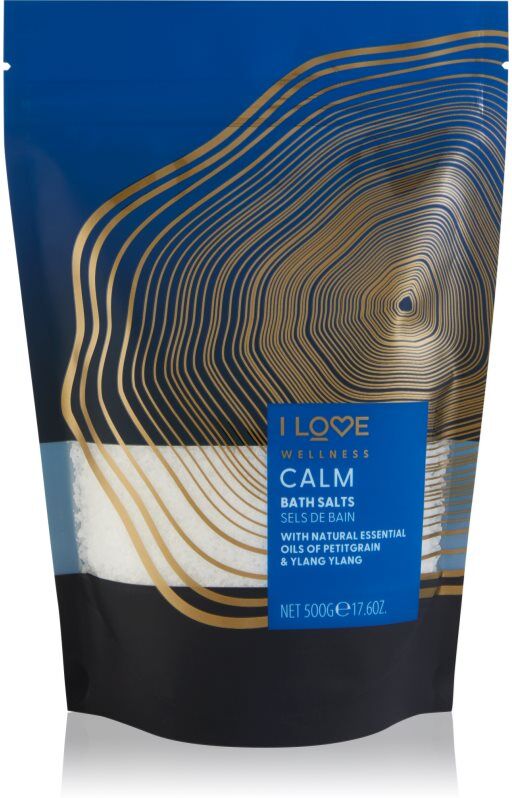
I Love Wellness Calm bath salt for relaxation 500 gI Love Wellness Calm, 500 g, Bath Salts for Women, Do you love long baths in nice hot water? Your favourite relaxation ritual can be enhanced and taken to another level by I Love Wellness Calmbath salts. It lets you create a fragrant salt bath right in your own home, allowing tension and feelings of inner turmoil to melt away while creating a wonderful sense of well-being. But you don't just get the relaxation you deserve, although the intoxicating smell of salt certainly invites you to do so. Apart from relaxation, your body will also be treated to regeneration. Salt is rich in natural minerals, so it will help with skin regeneration and contribute to relieving any skin issues you may have. Characteristics: relaxing effect has a pleasant fragrance moisturises and softens strengthens the skin’s defences has a relaxing effect on the muscles of the body Ingredients: vegan product camomile extract – soothes, counteracts irritation, helps reduce redness and promotes regeneration How to use: Pour into a warm bath and allow to dissolve.9,70 £*Shipping: 3,99 £Secure redirect to the provider
-
I Love Wellness Calm pillow mist for relaxation 125 mlI Love Wellness Calm, 125 ml, Air Fresheners Home Scents, The I Love Wellness Calm room spray will make your home smell beautiful with just one spray. The immediate effect means you can appreciate the pleasant fragrance as soon as you need it. Characteristics: a floral fragrance a herbal aroma citrus fragrance Ingredients: with essential oils How to use: You can also use it on fabrics. The fragrances are specially designed not to leave stains on fabric. Keep out of the reach of children and pets. If the product refill comes into contact with your skin, wash immediately with plenty of soap and water. If it gets into your eyes, rinse for several minutes with water.7,50 £*Shipping: 3,99 £Secure redirect to the provider
-
I Love Wellness Calm body oil for relaxation 125 mlI Love Wellness Calm, 125 ml, Bath Oils for Women, Do you have the feeling that your skin needs more care than it is getting from body lotion or body cream? I Love Wellness Calm body oil is the perfect product to enrich your skin care routine – it gives skin an extra dose of nourishment, supports its regeneration, and also softens it. Characteristics: leaves the skin flexible and supple has a pleasant fragrance relaxing strengthens the skin barrier nourishes and softens dry skin acts effectively against fatigue and exhaustion Ingredients: vegan product almond oil – nourishes, helps lock water in skin and keep it hydrated, softens rough textures and uneven skin, helps prevent flaking and irritation coconut oil – contains a large amount of antioxidants, helps prevent wrinkles and premature skin aging, intensively nourishes, softens and promotes hydration, regeneration and soothing of skin jojoba oil – keeps skin intensely hydrated, provides antioxidant protection, counteracts irritation and dryness, helps regulate sebum production and promotes regeneration How to use: Follow the instructions on the package.3,80 £*Shipping: 3,99 £Secure redirect to the provider
-
What are river variables and potential variables?
River variables are physical, chemical, and biological characteristics of a river that can be measured and monitored to assess its health and quality. These variables include parameters such as water temperature, pH levels, dissolved oxygen, nutrient concentrations, and the presence of pollutants. Potential variables are factors that can influence or impact the river variables, such as land use practices, urban development, agricultural runoff, and climate change. Understanding both river variables and potential variables is essential for effective river management and conservation efforts. **
-
What is the difference between primitive variables and reference variables?
Primitive variables store the actual value, such as numbers or characters, directly in memory. Reference variables, on the other hand, store a reference to an object in memory rather than the actual value. This means that when working with reference variables, you are actually working with the object that the reference points to, while with primitive variables, you are working directly with the value stored in memory. Additionally, primitive variables are allocated on the stack, while reference variables are allocated on the heap. **
-
What is the difference between ordinal scaled variables and ordinal variables?
Ordinal scaled variables are variables that have a specific order or ranking, but the intervals between the values are not necessarily equal. On the other hand, ordinal variables are variables that have categories with a natural order, but the numerical values assigned to them do not have any meaningful interpretation. In summary, ordinal scaled variables have meaningful numerical values with a specific order, while ordinal variables have categories with a natural order but lack meaningful numerical values. **
-
What are random variables?
Random variables are variables that can take on different values based on the outcome of a random event. They represent the possible outcomes of a random process and are used in probability theory and statistics to quantify uncertainty. Random variables can be discrete, taking on a finite number of values, or continuous, taking on any value within a range. They are essential for modeling and analyzing uncertain situations in various fields such as finance, engineering, and biology. **
Similar search terms for Variables
-
SEI Furniture Waterfront Black 2-drawer DeskSimple meets sophistication in this 2-drawer desk. The desk is crafted from a mix of wood and composite wood with a black satin finish, and features long turned legs and a spacious tabletop, large enough for a computer or your projects.264,99 $*Shipping: 0,00 $Secure redirect to the provider
-
SEI Furniture Waterfront 2-drawer White Writing DeskThis eye-catching, classically fashionable desk is ideal for students, home offices, and entry ways. Use as a console table or as a writing desk, because it has the functionality and style of both.174,03 $*Shipping: 0,00 $Secure redirect to the provider
-
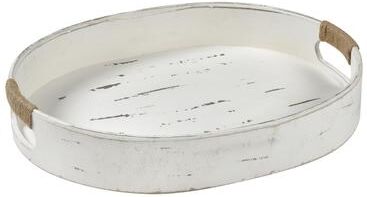
Atlas Lighting and Home Atlas Waterfront Oval Wooden White Tray - 20 inch WideThe Waterfront Oval Ottoman Tray is a wooden tray with a rustic white painted finish and rope-wrapped handles. With high sides and a sleek shape, this tray is ideal for entertaining and fits in with coastal and farmhouse style room settings.84,00 $*Shipping: 0,00 $Secure redirect to the provider
-
What are reduced variables?
Reduced variables are a set of transformed variables that are used to simplify the analysis of a system or process. These variables are often obtained by scaling or normalizing the original variables to make them more manageable and easier to interpret. By using reduced variables, complex systems can be analyzed and understood more effectively, leading to better insights and decision-making. **
-
How do I solve an equation with form variables and solution variables?
To solve an equation with form variables and solution variables, you first need to isolate the solution variable on one side of the equation. This involves performing the necessary operations (addition, subtraction, multiplication, division) to move all other variables to the other side of the equation. Once you have isolated the solution variable, you can then solve for it by performing any additional operations needed to simplify the equation. Finally, you can substitute the solution back into the original equation to verify that it satisfies the equation. **
-
What is a local variable and what is the difference to instance variables, class variables, and normal variables in Java?
A local variable in Java is a variable that is declared within a method, constructor, or block of code and is only accessible within that specific scope. It is temporary and exists only for the duration of the method execution. The main difference between local variables, instance variables, class variables, and normal variables in Java is their scope and lifetime. Instance variables are declared within a class but outside of any method and are accessible to all methods within the class. Class variables are declared with the static keyword and are shared among all instances of a class. Normal variables refer to any variable that is not a local, instance, or class variable. **
-
How do you multiply variables?
To multiply variables, you simply multiply the coefficients (numbers in front of the variables) together and then multiply the variables together. For example, to multiply 3x and 4y, you would multiply 3 and 4 to get 12, and then multiply x and y to get xy. So, the result of multiplying 3x and 4y would be 12xy. Remember to apply the rules of exponents if the variables have exponents. **
* All prices are inclusive of VAT and, if applicable, plus shipping costs. The offer information is based on the details provided by the respective shop and is updated through automated processes. Real-time updates do not occur, so deviations can occur in individual cases. ** Note: Parts of this content were created by AI.