Buy el-arenal.eu ?
We are moving the project
el-arenal.eu .
Are you interested in purchasing the domain
el-arenal.eu ?
domain@kv-gmbh.de · 0541-91531010
Buy el-arenal.eu ?
When does an accent go over the Spanish word "el"?
An accent goes over the Spanish word "el" when it is used as a pronoun to mean "him." This is to differentiate it from the article "el" meaning "the." For example, "Vi al chico" (I saw the boy) uses the article "el" without an accent, while "Vi él" (I saw him) uses the pronoun "el" with an accent. **
Is Mexican Spanish very different from Spanish Spanish?
Yes, Mexican Spanish and Spanish Spanish have some differences in vocabulary, pronunciation, and expressions. Mexican Spanish tends to use more indigenous words and expressions, while Spanish Spanish may have more influence from Arabic and other European languages. Additionally, there are variations in accent and slang between the two dialects. However, speakers of both dialects can generally understand each other with some adjustments. **


Similar search terms for Spanish
Top-Angebote
Products related to Spanish:
-
English-Spanish Buddy Readers: SET 1Young learners will love these funny, easy-to-read little books with text in both English and Spanish. These simple stories feature high-frequency words, rhyming, repetition, and adorable illustrations on topics kids love. Perfect as a bilingual...20,39 $*Shipping: 0,00 $Secure redirect to the provider
-
English-Spanish Buddy Readers: SET 2Young learners will love these funny, easy-to-read little books with text in both English and Spanish. These simple stories feature high-frequency words, rhyming, and adorable illustrations on topics that kids love. Perfect as a bilingual resource...20,39 $*Shipping: 0,00 $Secure redirect to the provider
-
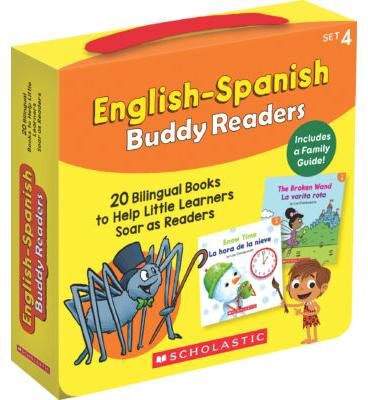
English-Spanish Buddy Readers: SET 4Young learners will love these funny, easy-to-read little books with text in both English and Spanish. These simple stories feature high-frequency words, rhyming, repetition, and adorable illustrations on topics that kids love. Perfect as a...20,39 $*Shipping: 0,00 $Secure redirect to the provider


-
What is the difference between Mexican Spanish and Spanish Spanish?
The main difference between Mexican Spanish and Spanish Spanish lies in the vocabulary, pronunciation, and some grammatical structures. Mexican Spanish tends to use more indigenous words and expressions, while Spanish Spanish may have more influence from Arabic and other European languages. Pronunciation also varies, with Mexican Spanish often pronounced more clearly and Spanish Spanish having a more distinct lisp in certain sounds. Additionally, there are differences in slang and colloquial expressions used in each variant of the language. **
-
What are the differences between Colombian Spanish and Spanish Spanish?
Colombian Spanish and Spanish Spanish have some differences in pronunciation, vocabulary, and grammar. In terms of pronunciation, Colombians tend to speak more slowly and with a softer accent compared to the Spanish from Spain. Additionally, there are some differences in vocabulary, with Colombians using certain words and expressions that may not be commonly used in Spain. Grammar differences are also present, with some variations in verb conjugations and sentence structure. Overall, while both dialects are mutually intelligible, there are noticeable differences in pronunciation, vocabulary, and grammar between Colombian Spanish and Spanish Spanish. **
-
Why is it called "el bar" in Spanish and not "la bar"?
In Spanish, nouns are categorized as either masculine or feminine. The word "bar" is a masculine noun, so it is preceded by the masculine article "el" rather than the feminine article "la." This is a grammatical rule in the Spanish language, where the gender of the noun determines the article that precedes it. Therefore, "el bar" is the correct way to refer to a bar in Spanish. **
-
When do you use "de, de el, del, and de la" in Spanish?
In Spanish, "de" is used to indicate possession or relationship between two nouns, for example: el libro de Juan (Juan's book). "De el" is contracted to "del" and is used when the noun following it is masculine singular, for example: el libro del estudiante (the student's book). "De la" is used when the noun following it is feminine singular, for example: la casa de la abuela (the grandmother's house). These prepositions are used to show possession or relationship between two nouns in Spanish. **

Spanish Islands
Spanish Islands refer to the group of islands that belong to Spain, including the Balearic Islands in the Mediterranean Sea (such as Mallorca, Ibiza, and Menorca) and the Canary Islands in the Atlantic Ocean (such as Tenerife, Gran Canaria, and Lanzarote). These islands are popular tourist destinations known for their beautiful beaches, vibrant culture, and unique landscapes. **
Should I study English-Spanish or Spanish-French?
The choice between studying English-Spanish or Spanish-French depends on your personal interests and goals. If you are interested in improving your proficiency in both English and Spanish, then studying English-Spanish would be beneficial. On the other hand, if you are looking to broaden your language skills and explore a new language, then studying Spanish-French could be a great option. Consider your motivations for learning a new language and choose the option that aligns best with your objectives. **
Top-Angebote
Products related to Spanish:
-
Gaslow Euro/Spanish AdaptorThe Euro/Spanish Fill Adapter allows you to fill at European LPG stations with the Euro/Spanish style pump nozzle. The adapter simply screws into the internal thread on the UK Fill point. Suitable for pumps in Spain and Germany.22,56 £*Shipping: 5,00 £Secure redirect to the provider
-
Learn Spanish with the Michel Thomas Method – Foundation Spanish New Edition Beginner Audio CourseFoundation Spanish New Edition - Learn Spanish with the Michel Thomas Method Description Looking for a convenient language course that fits your lifestyle and gets you speaking a new language in a matter of weeks; not years? The original no-books; no-homework; no-memorizing method is in tune with the way the brain prefers to receive; store and retrieve information. You'll stick with it because you'll love it. * Pick up Spanish naturally and unforgettably without strain or stress * Learn from listening and speaking; without the pressure of writing or memorizing * Build up your Spanish in manageable steps by thinking out answers for yourself WHY IS THE METHOD SO SUCCESSFUL? 'What you understand; you know; and what you know; you don't forget.' - Michel Thomas Before there was machine learning; there was Michel Thomas. For over 50 years he worked on decoding languages by breaking them down into their most essential component parts. These 'building blocks' are introduced to the learner sequentially in such a way that you reconstruct the language for yourself - to form your own sentences; to say what you want; when you want. This unique method draws on the principles of instructional psychology and works with the way your brain prefers to receive; store and retrieve information. Knowledge is structured and organized so that you absorb the language easily and don't forget it. The method is designed to eliminate the stress which prevents you from relaxing and allowing the brain to work in the way which accepts learning in a seemingly painless; very exciting and highly motivating way. HOW DO THE COURSES WORK? 'All stress inhibits true and effective learning' - Michel Thomas During the course; you will join Michel Thomas and two students in a live lesson; learning from both their successes and their mistakes to keep you motivated and involved throughout the course. You; as the learner; become the third student and participate actively in the class. Within the very first hour you will be able to construct simple phrases by listening and thinking out answers for yourself without the pressure of writing or stress of having to memorize. You will learn at your own pace; pausing and repeating where necessary; and complete the course in about 20-30 hours. By the end of the course; you will understand and have the confidence to speak basic Spanish. WHAT WILL I ACTUALLY ACHIEVE? 'I am the architect who builds the house. It's up to you to decorate it.' - Michel Thomas The Michel Thomas Method will help you kick-start; continue; and flourish in your Spanish language learning journey. It is not intended to get you perfectly fluent; but it will get you speaking and using Spanish; with proper pronunciation; faster than most any other method. It is designed to give you a strong foundation and good working knowledge of a language from which you can expand and later 'add decoration' to. It is a rapid method for learning; but still requires effort and concentration on the...20,99 £*Shipping: 2,99 £Secure redirect to the provider
-
English-Spanish Buddy Readers: SET 1Young learners will love these funny, easy-to-read little books with text in both English and Spanish. These simple stories feature high-frequency words, rhyming, repetition, and adorable illustrations on topics kids love. Perfect as a bilingual...20,39 $*Shipping: 0,00 $Secure redirect to the provider
-
When does an accent go over the Spanish word "el"?
An accent goes over the Spanish word "el" when it is used as a pronoun to mean "him." This is to differentiate it from the article "el" meaning "the." For example, "Vi al chico" (I saw the boy) uses the article "el" without an accent, while "Vi él" (I saw him) uses the pronoun "el" with an accent. **
-
Is Mexican Spanish very different from Spanish Spanish?
Yes, Mexican Spanish and Spanish Spanish have some differences in vocabulary, pronunciation, and expressions. Mexican Spanish tends to use more indigenous words and expressions, while Spanish Spanish may have more influence from Arabic and other European languages. Additionally, there are variations in accent and slang between the two dialects. However, speakers of both dialects can generally understand each other with some adjustments. **
-
What is the difference between Mexican Spanish and Spanish Spanish?
The main difference between Mexican Spanish and Spanish Spanish lies in the vocabulary, pronunciation, and some grammatical structures. Mexican Spanish tends to use more indigenous words and expressions, while Spanish Spanish may have more influence from Arabic and other European languages. Pronunciation also varies, with Mexican Spanish often pronounced more clearly and Spanish Spanish having a more distinct lisp in certain sounds. Additionally, there are differences in slang and colloquial expressions used in each variant of the language. **
-
What are the differences between Colombian Spanish and Spanish Spanish?
Colombian Spanish and Spanish Spanish have some differences in pronunciation, vocabulary, and grammar. In terms of pronunciation, Colombians tend to speak more slowly and with a softer accent compared to the Spanish from Spain. Additionally, there are some differences in vocabulary, with Colombians using certain words and expressions that may not be commonly used in Spain. Grammar differences are also present, with some variations in verb conjugations and sentence structure. Overall, while both dialects are mutually intelligible, there are noticeable differences in pronunciation, vocabulary, and grammar between Colombian Spanish and Spanish Spanish. **
Similar search terms for Spanish
-
English-Spanish Buddy Readers: SET 2Young learners will love these funny, easy-to-read little books with text in both English and Spanish. These simple stories feature high-frequency words, rhyming, and adorable illustrations on topics that kids love. Perfect as a bilingual resource...20,39 $*Shipping: 0,00 $Secure redirect to the provider
-
English-Spanish Buddy Readers: SET 4Young learners will love these funny, easy-to-read little books with text in both English and Spanish. These simple stories feature high-frequency words, rhyming, repetition, and adorable illustrations on topics that kids love. Perfect as a...20,39 $*Shipping: 0,00 $Secure redirect to the provider
-
Logitech K120 Wired Keyboard Black - SpanishYour hands will enjoy the low-profile, whisper-quiet keys and standard layout with full-size F-keys and number pad. The slim keyboard isn't just sleek-it's tough with a spill-resistant design, sturdy tilt legs and durable keys. You simply plug it into a USB port on your desktop, laptop or netbook computer and start using it right away. Logitech K120 - Keyboard - USB - Spanish33,49 £*Shipping: 0,00 £Secure redirect to the provider
-
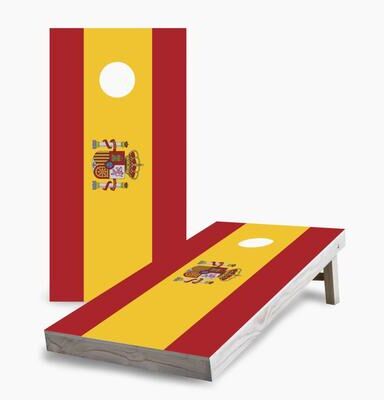
Skip's Garage Spanish Flag Cornhole Boards"Includes: (2) Cornhole Boards & (8) Bags. Boards are Regulation Sized 24"" Wide x 48"" Long. Bags Will Complement The Board Colors. Easily Message Us Bag Color Requests. Easily Add a Carry Cases, Lights, or Both!"253,49 $*Shipping: 0,00 $Secure redirect to the provider
-
Why is it called "el bar" in Spanish and not "la bar"?
In Spanish, nouns are categorized as either masculine or feminine. The word "bar" is a masculine noun, so it is preceded by the masculine article "el" rather than the feminine article "la." This is a grammatical rule in the Spanish language, where the gender of the noun determines the article that precedes it. Therefore, "el bar" is the correct way to refer to a bar in Spanish. **
-
When do you use "de, de el, del, and de la" in Spanish?
In Spanish, "de" is used to indicate possession or relationship between two nouns, for example: el libro de Juan (Juan's book). "De el" is contracted to "del" and is used when the noun following it is masculine singular, for example: el libro del estudiante (the student's book). "De la" is used when the noun following it is feminine singular, for example: la casa de la abuela (the grandmother's house). These prepositions are used to show possession or relationship between two nouns in Spanish. **
-
Spanish Islands
Spanish Islands refer to the group of islands that belong to Spain, including the Balearic Islands in the Mediterranean Sea (such as Mallorca, Ibiza, and Menorca) and the Canary Islands in the Atlantic Ocean (such as Tenerife, Gran Canaria, and Lanzarote). These islands are popular tourist destinations known for their beautiful beaches, vibrant culture, and unique landscapes. **
-
Should I study English-Spanish or Spanish-French?
The choice between studying English-Spanish or Spanish-French depends on your personal interests and goals. If you are interested in improving your proficiency in both English and Spanish, then studying English-Spanish would be beneficial. On the other hand, if you are looking to broaden your language skills and explore a new language, then studying Spanish-French could be a great option. Consider your motivations for learning a new language and choose the option that aligns best with your objectives. **
* All prices are inclusive of VAT and, if applicable, plus shipping costs. The offer information is based on the details provided by the respective shop and is updated through automated processes. Real-time updates do not occur, so deviations can occur in individual cases. ** Note: Parts of this content were created by AI.